CARIFESTA ’76
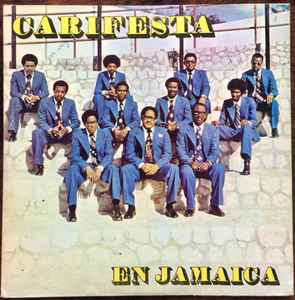
CARIFESTA ’76 CARIFESTA & Edna – The Beginning CARIFESTA was conceived not only as a festival, but as a cultural, region-building project for the Caribbean. Emerging at a time when many Caribbean states had only recently gained independence, it sought to answer a profound question: Who are we as Caribbean people? Through music, dance, theatre, visual art and literature, CARIFESTA became a space where the region could celebrate its shared history while embracing its diverse cultural influences. CARIFESTA was born in the post-independence era, when Caribbean leaders and intellectuals believed that political independence needed to be matched by cultural confidence. If the National Dance Theatre Company became one of Jamaica’s gifts to the Caribbean, then CARIFESTA became one of the Caribbean’s greatest gifts to Jamaica. In 1976, it did more than bring regional artists to Kingston, it accelerated the creation of lasting cultural institutions, strengthened artistic education, developed technical expertise and reinforced the idea that the arts were central to national development rather than peripheral to it. Every generation remembers CARIFESTA for different reasons. Some remember the music that filled Kingston’s streets. Others remember artists arriving from every corner of the Caribbean, transforming Jamaica into the cultural capital of the region. For many, CARIFESTA ’76 was a celebration. But nearly fifty years later, perhaps its greatest achievement cannot be found in photographs, programmes or newspaper headlines. Its greatest achievement still stands today at 1 Arthur Wint Drive. The institution now known as the Edna Manley College of the Visual and Performing Arts owes much of its existence to the vision that emerged during CARIFESTA 1976. While festivals are often measured by attendance figures or memorable performances, CARIFESTA left Jamaica with something far more enduring: a permanent national home for artistic education that continues to shape generations of Caribbean creatives. Before CARIFESTA Before 1976, there was no unified arts college. The Jamaica School of Art, Jamaica School of Music, National School of Drama and Jamaica School of Dance had each been established independently, under different leadership, philosophies and physical locations. Each institution had developed its own identity and produced remarkable graduates, but opportunities for collaboration between disciplines remained limited. A dancer rarely trained alongside musicians. Visual artists had little daily interaction with actors. The performing and visual arts existed in separate spaces despite drawing inspiration from the same Jamaican cultural traditions. CARIFESTA became the catalyst Hosting the second Caribbean Festival of Arts demanded more than staging performances. Jamaica needed rehearsal spaces, theatres, technical expertise, exhibition venues and trained cultural workers capable of supporting one of the largest artistic gatherings ever held in the English-speaking Caribbean. It was within this environment that the Government moved to establish the Cultural Training Centre by bringing the four schools together on a single campus under the Institute of Jamaica. The announcement was not simply an administrative decision. It represented a declaration that artistic education deserved national infrastructure comparable to other professional disciplines. One of the most overlooked aspects of CARIFESTA ’76 was its investment in technical capacity. Contemporary newspaper reports highlighted that hundreds of Jamaicans received specialised training in stage management, lighting, sound engineering, costume production, wardrobe management and front-of-house operations to prepare for the festival. These were not temporary volunteers. They became the technicians, production managers and cultural professionals who strengthened Jamaica’s creative industries long after the festival ended. As architect Patricia Green later reflected, many of those trainees effectively became the first generation associated with the new Cultural Training Centre. The significance of the new Cultural Training Centre extended beyond sharing classrooms. For perhaps the first time, visual artists, musicians, actors and dancers were encouraged to think collectively about what Caribbean artistic identity should become. Later reflections by theatre practitioner Professor Errol Hill and others have described CARIFESTA as a period of extraordinary Caribbean optimism, while cultural leaders including Rex Nettleford used the new institution to promote an educational philosophy rooted in Caribbean history, African diasporic traditions and community engagement. Rather than merely teaching artistic technique, the Cultural Training Centre sought to develop artists who understood their responsibility to society. Community outreach, Caribbean texts and indigenous performance traditions became central to its philosophy. By 1983, the Organisation of American States (OAS) recognised the institution as the Inter-American Centre for Caribbean Cultural Development, acknowledging its growing regional influence. When it was renamed the Edna Manley College of the Visual and Performing Arts in 1995, the foundation established in 1976 had already transformed artistic education across the Caribbean. Thousands of graduates, including celebrated painters and sculptors, actors, choreographers, musicians, educators and arts administrators would emerge from the institution, shaping Jamaica’s cultural identity both locally and internationally. The Legacy Today Looking back five decades later, it is tempting to remember CARIFESTA ’76 simply as one of Jamaica’s great cultural celebrations. Yet festivals, by their nature, eventually conclude. Stages are dismantled. Audiences go home. The true measure of a cultural investment lies in what remains after the applause has faded. In that respect, CARIFESTA ’76 succeeded beyond expectation. Its most enduring performance was not presented on a stage. It was the creation of a permanent institution where generations of Caribbean artists would continue to learn, create and redefine the region’s cultural imagination. Today, every student who walks onto the campus of the Edna Manley College is, in many ways, part of the unfinished story that began with CARIFESTA ’76.
From Silence to Centre Stage: EDNA Alum Damany Hughes Makes NDTC History as First D/deaf Dancer

From Silence to Centre Stage: EDNA Alum Damany Hughes Makes NDTC History as First D/deaf Dancer From Silence to Centre Stage: EDNA alum Damany Hughes Makes NDTC History as First D/deaf Dancer When Damany Hughes dances, you don’t just see the movement—you feel it. The 2025 graduate of the Edna Manley College of the Visual and Performing Arts (EMCVPA) has made history as the first D/deaf performer to join Jamaica’s National Dance Theatre Company (NDTC) in its 63-year legacy. His debut marks not only a personal triumph, but a powerful step towards inclusivity in the Caribbean’s performing arts sector. But long before the spotlight, the national stage, and the standing ovations, Damany was a young boy learning the world his own way—through vibration, energy, and silence. Photos contributed by Stuart Reeves Discovering Dance Without Sound Growing up hard-of-hearing, Damany didn’t experience rhythm through melody or lyrics. Instead, he felt it. “I would watch dancers in silence and feel everything they were expressing. That’s when I realised dance isn’t just about music—it’s about connection, expression, and freedom. They inspired me to believe dance could belong to me, too,” he recalls. For Damany, dance, much like sign language, became a powerful form of non-verbal storytelling. It allowed him to communicate emotions and ideas beyond words, using his body as the ultimate translator. “Dance is my expression of art. It is how I am able to express myself. I had to find ways to adapt, to feel the music in my bones, read subtle visual cues, and trust my body’s internal rhythm. That pushed me to explore movement in deeper, more emotional ways.” Facing His Fears Damany’s path to professional dance was far from typical. He attended the Lister Mair/Gilby High School for the Deaf, where his passion for performance was nurtured. Supported by his principal, he applied to EMCVPA’s School of Dance—becoming one of the first D/deaf students to join its degree programme. What followed was four years of rigorous technical training, personal breakthroughs, and emotional resilience. “I came in with fears of not fitting in, being misunderstood, of struggling in a space built around sound, but EDNA taught me that art is about expression, not perfection.” Rather than being limited by his hearing difference, Damany developed alternative ways of learning choreography—relying on visual cues, muscle memory, and internal rhythm to create powerful performances. “It’s a different way of dancing, but it’s just as powerful—sometimes even more—because I dance with my whole being,” he explains. A Dream Realised In July 2025, Damany made his official debut with the National Dance Theatre Company (NDTC) in their 63rd season, fulfilling a long-held dream and making national history in the process. “I dreamt of dancing with the NDTC. Getting into EDNA was the first step. I remember really struggling with ballet in the beginning to grasp it, but regardless of the challenges, I have continued to push through to realise my goals… and to now perform with Jamaica’s leading dance company… it’s such a remarkable thing, especially being the first D/deaf person to do so.” This achievement reflects not only Damany’s talent and determination but also the EMCVPA’s commitment to inclusive arts education, creating opportunities for differently abled students to thrive in professional spaces. His former Dean and NDTC’s Artistic Director, Marlon Simms, has been one of his biggest champions, crediting Damany’s success to both his raw talent and the School of Dance’s inclusive teaching model. “I have learned much more from Damany than he has learned from us over the years. It’s so nice to see how much he has grown, how open and welcoming the school has been to someone with his challenges, and how differently they learn. That has been a part of our development process as faculty members.” Breaking Barriers for Future Creatives Now a professional performer, Damany encourages other D/deaf persons and creatives with disabilities to pursue their passions, even when the path seems unclear. “To every young or differently abled artist out there who feels like the arts world wasn’t made for you, I want you to know this, the arts world needs you. You belong in every studio, on every stage, in every gallery. Your perspective, your story, and your way of expressing it are not only valid, they are vital. If you are interested [as a D/deaf dancer], you can find support to be included. Surround yourself with people who see your worth. Keep learning, keep expressing, and never let anyone define your limits.” Be Unapologetically You For young artists coming up behind him, Damany leaves this message: “You’re not just creating art, you’re creating change. The beauty of art is that it grows and evolves when people who are different step in and challenge the norm. Your differences are not a weakness; they are your strength, your originality, your power. Yes, the journey will be harder. You may have to fight to be seen or understood. You may even have to carve your own path where one doesn’t exist… but every step you take makes it easier for the next person like you. So be unapologetically you. That’s where the magic lives.” A New Chapter for Jamaican Dance Damany Hughes isn’t just a dancer, he represents endless possibilities for Jamaica’s creative industries to embrace a more inclusive future. His story sends a strong message about the need for accessible training opportunities, adaptive teaching methods and open-mindedness in the performing arts sector. It is also a testament to the power of inclusive arts education at EMCVPA. As he takes his place on one of Jamaica’s most prestigious stages, Damany says simply: “My journey with dance has only just begun.” With grace, grit, and guts, Damany is shifting narratives in Jamaican dance, proving that inclusion doesn’t dilute artistry—it deepens it. Congratulations, Damany! #EDNAnation couldn’t be prouder.
Celebrating Excellence: EMCVPA Lecturers Win Big at the 2025 Actor Boy Awards
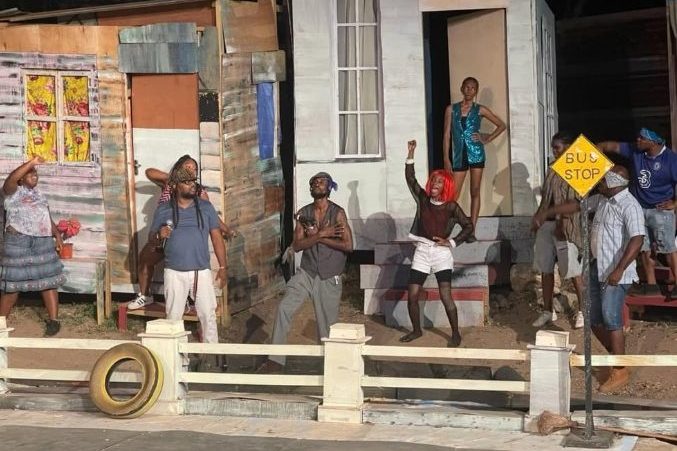
Celebrating Excellence: EMCVPA Lecturers Win Big at the 2025 Actor Boy Awards Celebrating Excellence: EMCVPA Lecturers Win Big at the 2025 Actor Boy Awards The Edna Manley College of the Visual and Performing Arts proudly celebrates theoutstanding achievements of two of our very own — Paul Newman and Owen “Blakka”Ellis — who were honoured at the 2025 Actor Boy Awards for their exemplarycontributions to Jamaican theatre. Paul Newman, a lecturer in the School of Dance, took home the award for Best Choreography for Pull Up: Jamaica Land We Love — produced by DMH Productions. Known for his bold artistic vision and tireless commitment to excellence, Paul’s choreography pushed both creative and physical boundaries. His ability to inspire performers, even those new to movement, has become one of his most celebrated strengths. The recognition comes as no surprise to those who have worked with him. As shared by DMH Productions on social media: “Paul’s relentless drive to push boundaries and create magic on stage has truly set him apart… turning every movement into a masterpiece.” This marks his second Actor Boy Award win — a testament to his consistency, influence, and mastery of the stage. Meanwhile, on the School of Drama side, celebrated actor/comedian, director, writerand lecturer Owen “Blakka” Ellis led the musical Buss Big to a Best Musical win at this year’s ceremony, tying with JMTC’s Aladdin. The production, a dynamic exploration of dancehall, culture, and ambition, was met with thunderous applause during its run — affirming Blakka’s sharp storytelling and musical direction. The award follows on the heels of Tick Tock, another powerful School of Drama stage work co-created with fellow lecturer Camille Quamina, which has continued to generate buzz long after closing, tackling themes of gender, power, and identity with honesty and edge. From Buss Big to Tick Tock, his work continues to stir critical conversations — a reflection of both his artistry and his enduring commitment to social commentary through performance. These wins shine a spotlight not only on two stellar creatives, but on the calibre of mentorship and artistic leadership alive at here EMCVPA. We salute Paul Newman and Owen “Blakka” Ellis for continuing to uplift, inspire, and expand the boundaries of Jamaican theatre — on our stages and far beyond. Powerful Scenes from the School of Drama play, ‘Buss Big’ a dancehall musicaland recipient of the ‘Best Musical’ Actor Boy Award this year.
Matthew McCarthy to Design Mural at Norman Manley International Airport

Matthew McCarthy to Design Mural at Norman Manley International Airport Matthew McCarthy to Design Mural at Norman Manley International Airport We are thrilled to celebrate the latest achievement of visual artist and Edna Manley College SVA alumnus, Matthew McCarthy, who has been selected to design a bold new mural for the iconic roundabout letters at the Norman Manley International Airport (NMIA). This exciting project is a partnership between Kingston Creative and PAC Kingston Airport Limited (PACKAL), operators of NMIA, and invites a uniquely Jamaican perspective to greet travellers as they arrive on the island—it’s especially symbolic as the airport is currently undergoing a five-year development initiative to position it as a first-rate point of travel globally. Out of numerous submissions, Matthew’s concept stood out — a testament to his consistent creative vision and dynamic visual language. Known on Instagram as @eyedealistworldwide, Matthew has been prolific since his days as a student at the College, using art as a vehicle for social commentary, cultural celebration, and visual storytelling through graffiti work around the city of Kingston. This selection comes as no surprise. His work continues to impact public spaces across Jamaica and has also gained recognition internationally. We’re proud to see one of our own transforming the gateway to Kingston with his distinct artistic voice. Congratulations, Matthew — your creativity continues to make a powerful mark on Jamaica’s visual landscape!
Nevrona Campbell Helps Buff Bay High Take Silver in Regional Lifestyle Competition
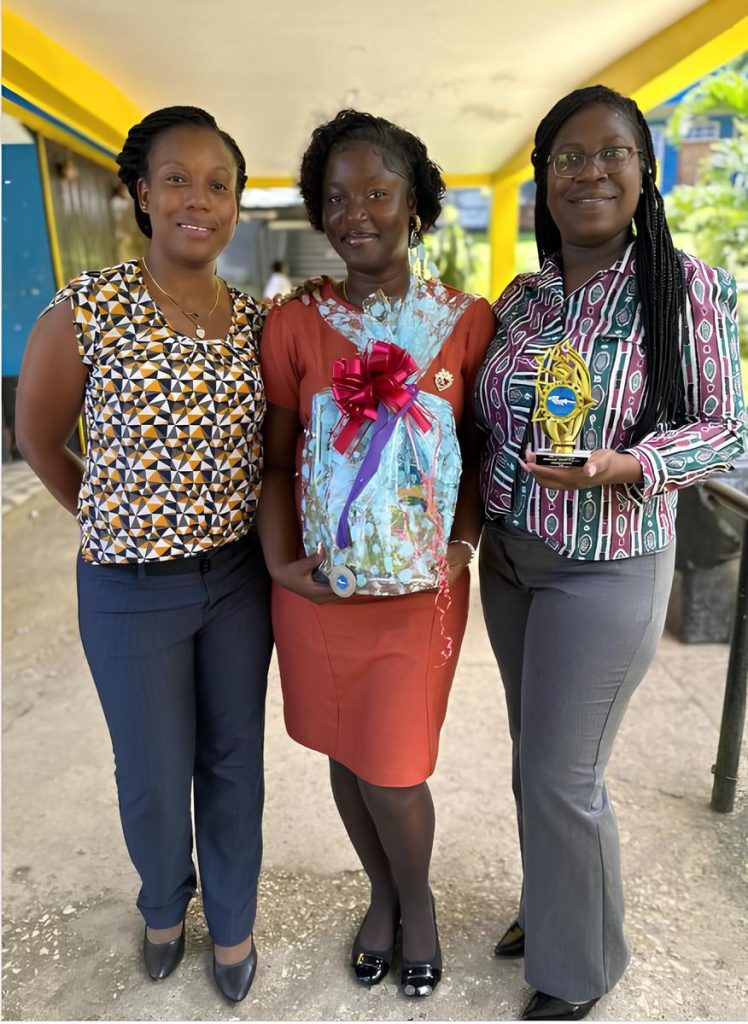
Nevrona Campbell Helps Buff Bay High Take Silver in Regional Lifestyle Competition Nevrona Campbell Helps Buff Bay High Take Silver in Regional Lifestyle Competition We are proud to highlight the inspiring work of Nevrona Campbell, a graduate of the School of Drama who is now serving as the Drama Teacher at Buff Bay High School, Ms Campbell recently played a key role in her school’s outstanding performance at the North-East Regional Health Authority’s Regional Healthy Lifestyle Competition, held on Thursday, March 27, 2025. Under the guidance of a dedicated team of educators — including Ms Campbell — Buff Bay High’s Theatre Arts Collective secured an impressive 2nd Place finish, earning a Silver Medal and Trophy across Regions 1, 2, and 3. Since joining the school, Ms Campbell has made a significant impact on its cultural landscape, with many praising the waves she’s already making. The group’s achievement stands as a testament to thepower of creative education and the value of strong mentorship. We salute Nevrona Campbell for her continued commitment to youth development and the performing arts. Her success reminds us that the legacy of Edna Manley College (and the School of Drama) lives on in classrooms and communities across Jamaica. Congratulations, Nevrona — your alma mater is very proud!
Vanessa D Riley Brings Hand-Painted Artistry to Tesla’s Cybertruck

Vanessa D Riley Brings Hand-Painted Artistry to Tesla’s Cybertruck Vanessa D Riley Brings Hand-Painted Artistry to Tesla’s Cybertruck From the studios of the School of Visual Arts to the sleek panels of one of the world’s most talked-about vehicles — former student Vanessa D. Riley (aka @painted.lady._) of Painted Lady Studios is turning heads with her stunning hand-painted design for the Tesla Cybertruck, commissioned for a client by Auto Paddock dealership.Vanessa’s artwork brings a refreshing touch of human creativity and precision to the futuristic frame of the Cybertruck, using paint and Sharpie markers to bring her hand-drawn, digitised design to life. Shared by @autopaddock and celebrated across social media, the piece showcases her whimsical, colourful styling and meticulous technique — a striking fusion of fine art and industrial design which she executed with the help ofher team. Check it out in the video below.Though details of upcoming projects remain under wraps, this is clearly just one of many exciting collaborations to come from this spectacular visual artist. Her work continues to redefine how and where art can live — and we definitely love it. Congratulations, Vanessa — we can’t wait to see what you create next!
Homecoming! JaRIA Returns to EDNA for Reggae Month 2025
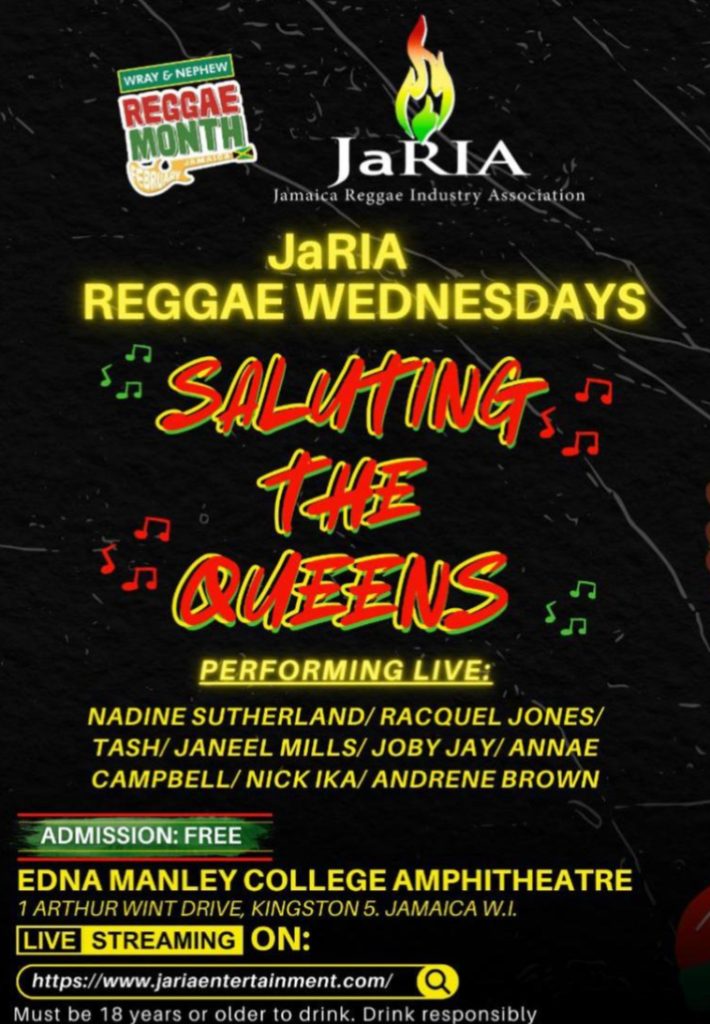
Homecoming! JaRIA Returns to EDNA for Reggae Month 2025 Homecoming! JaRIA Returns to EDNA for Reggae Month 2025
New Year, New SCEAP Courses for all!

New Year, New SCEAP Courses for all! New Year, New SCEAP Courses for all!
Petrona Morrison

Petrona Morrison was born in Manchester, Jamaica in 1954. She received her initial art training in Canada, at McMaster University, where she graduated in 1976. She left Jamaica again in the mid 1980s for MFA
Inclusion of Dance
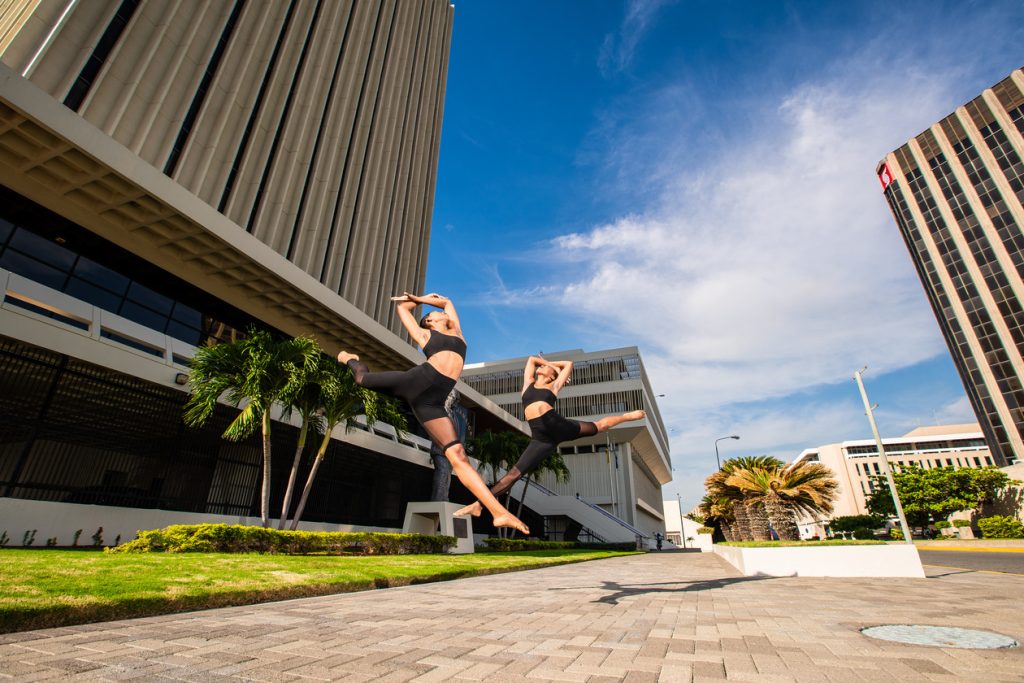
Part of the background of the UNESCO Position Paper for the First World Conference on Arts Education in March 2006 states that Art Education—which aims at passing down cultural and artistic heritage to young people, giving them the means to create their own language
