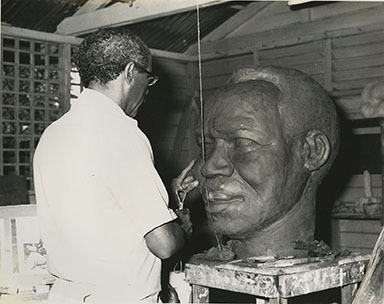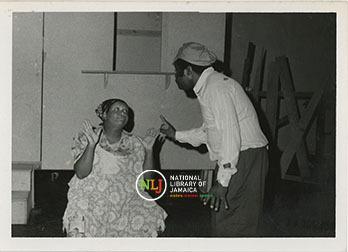
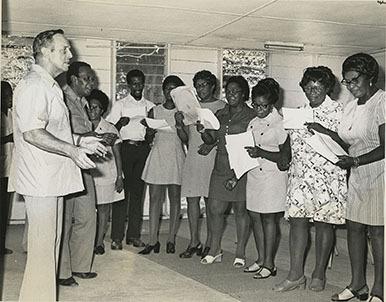
CARIFESTA was conceived not only as a festival, but as a cultural, region-building project for the Caribbean. Emerging at a time when many Caribbean states had only recently gained independence, it sought to answer a profound question: Who are we as Caribbean people? Through music, dance, theatre, visual art and literature, CARIFESTA became a space where the region could celebrate its shared history while embracing its diverse cultural influences.
CARIFESTA was born in the post-independence era, when Caribbean leaders and intellectuals believed that political independence needed to be matched by cultural confidence. If the National Dance Theatre Company became one of Jamaica’s gifts to the Caribbean, then CARIFESTA became one of the Caribbean’s greatest gifts to Jamaica. In 1976, it did more than bring regional artists to Kingston, it accelerated the creation of lasting cultural institutions, strengthened artistic education, developed technical expertise and reinforced the idea that the arts were central to national development rather than peripheral to it.
Every generation remembers CARIFESTA for different reasons. Some remember the music that filled Kingston’s streets. Others remember artists arriving from every corner of the Caribbean, transforming Jamaica into the cultural capital of the region. For many, CARIFESTA ’76 was a celebration. But nearly fifty years later, perhaps its greatest achievement cannot be found in photographs, programmes or newspaper headlines. Its greatest achievement still stands today at 1 Arthur Wint Drive.
The institution now known as the Edna Manley College of the Visual and Performing Arts owes much of its existence to the vision that emerged during CARIFESTA 1976. While festivals are often measured by attendance figures or memorable performances, CARIFESTA left Jamaica with something far more enduring: a permanent national home for artistic education that continues to shape generations of Caribbean creatives.
Before CARIFESTA
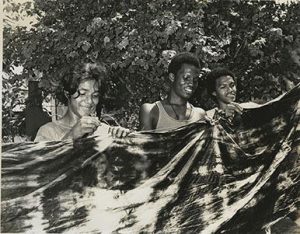
Before 1976, there was no unified arts college. The Jamaica School of Art, Jamaica School of Music, National School of Drama and Jamaica School of Dance had each been established independently, under different leadership, philosophies and physical locations.
Each institution had developed its own identity and produced remarkable graduates, but opportunities for collaboration between disciplines remained limited. A dancer rarely trained alongside musicians. Visual artists had little daily interaction with actors. The performing and visual arts existed in separate spaces despite drawing inspiration from the same Jamaican cultural traditions.
CARIFESTA became the catalyst
Hosting the second Caribbean Festival of Arts demanded more than staging performances. Jamaica needed rehearsal spaces, theatres, technical expertise, exhibition venues and trained cultural workers capable of supporting one of the largest artistic gatherings ever held in the English-speaking Caribbean.
It was within this environment that the Government moved to establish the Cultural Training Centre by bringing the four schools together on a single campus under the Institute of Jamaica.
The announcement was not simply an administrative decision. It represented a declaration that artistic education deserved national infrastructure comparable to other professional disciplines.
One of the most overlooked aspects of CARIFESTA ’76 was its investment in technical capacity. Contemporary newspaper reports highlighted that hundreds of Jamaicans received specialised training in stage management, lighting, sound engineering, costume production, wardrobe management and front-of-house operations to prepare for the festival. These were not temporary volunteers. They became the technicians, production managers and cultural professionals who strengthened Jamaica’s creative industries long after the festival ended.
As architect Patricia Green later reflected, many of those trainees effectively became the first generation associated with the new Cultural Training Centre.
The significance of the new Cultural Training Centre extended beyond sharing classrooms. For perhaps the first time, visual artists, musicians, actors and dancers were encouraged to think collectively about what Caribbean artistic identity should become.
Later reflections by theatre practitioner Professor Errol Hill and others have described CARIFESTA as a period of extraordinary Caribbean optimism, while cultural leaders including Rex Nettleford used the new institution to promote an educational philosophy rooted in Caribbean history, African diasporic traditions and community engagement.
Rather than merely teaching artistic technique, the Cultural Training Centre sought to develop artists who understood their responsibility to society. Community outreach, Caribbean texts and indigenous performance traditions became central to its philosophy.
By 1983, the Organisation of American States (OAS) recognised the institution as the Inter-American Centre for Caribbean Cultural Development, acknowledging its growing regional influence.
When it was renamed the Edna Manley College of the Visual and Performing Arts in 1995, the foundation established in 1976 had already transformed artistic education across the Caribbean.
Thousands of graduates, including celebrated painters and sculptors, actors, choreographers, musicians, educators and arts administrators would emerge from the institution, shaping Jamaica’s cultural identity both locally and internationally.
The Legacy Today
Looking back five decades later, it is tempting to remember CARIFESTA ’76 simply as one of Jamaica’s great cultural celebrations. Yet festivals, by their nature, eventually conclude. Stages are dismantled. Audiences go home.
The true measure of a cultural investment lies in what remains after the applause has faded. In that respect, CARIFESTA ’76 succeeded beyond expectation. Its most enduring performance was not presented on a stage. It was the creation of a permanent institution where generations of Caribbean artists would continue to learn, create and redefine the region’s cultural imagination.
Today, every student who walks onto the campus of the Edna Manley College is, in many ways, part of the unfinished story that began with CARIFESTA ’76.